B2B eBook Marketing Strategy: Turning Long-Form Content into Pipeline Growth
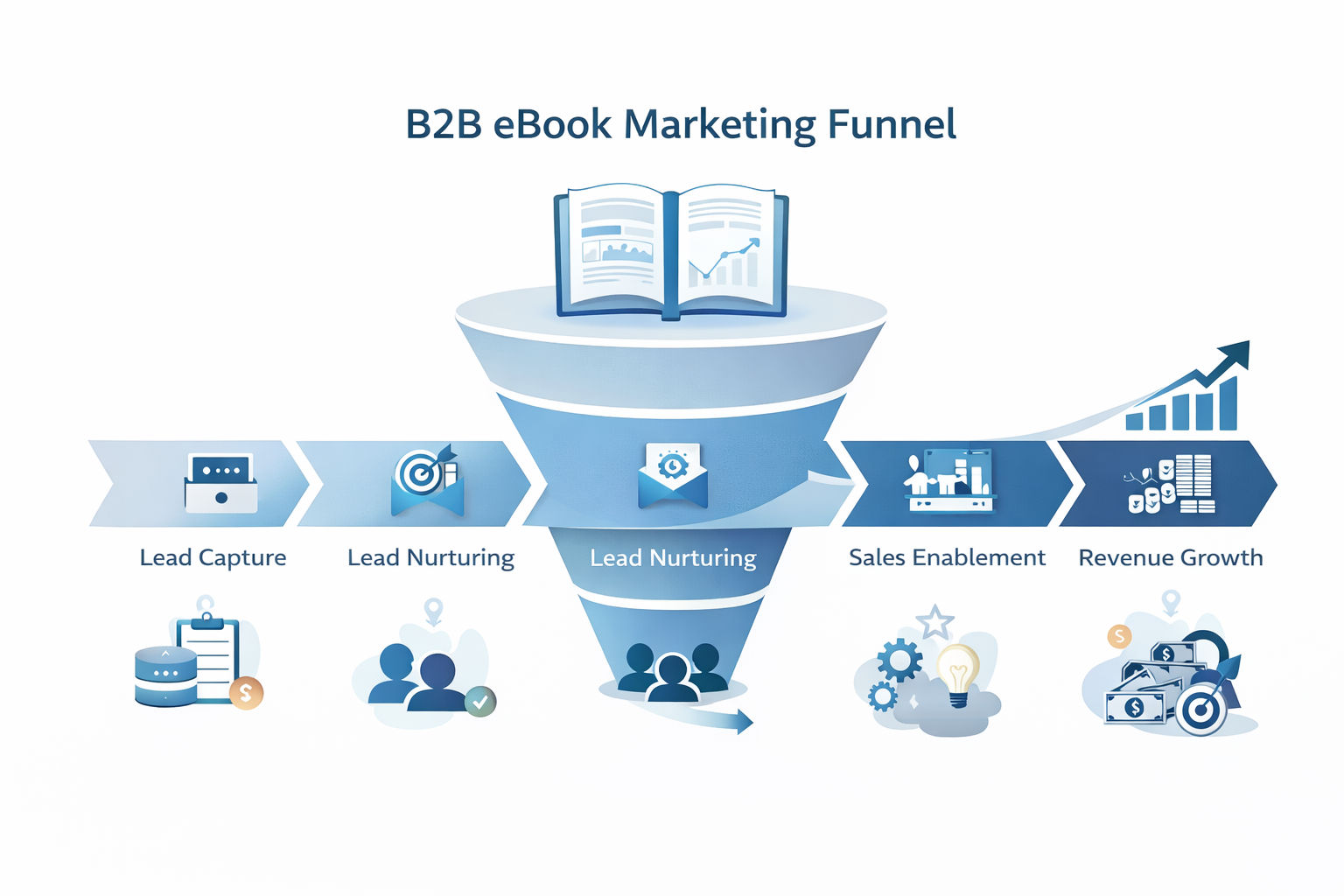
In B2B marketing, influence is earned through depth. Buyers do not make decisions impulsively — they evaluate, compare, consult stakeholders, and justify ROI. Short-form content plays a role in visibility, but when it comes to authority and lead qualification, few assets rival the strategic power of a well-crafted eBook.
Why eBooks Matter in Complex B2B Buying Cycles
The modern B2B buying journey is nonlinear and committee-driven. A single purchasing decision may involve executives, technical evaluators, finance stakeholders, and procurement teams.
eBooks support this complexity by delivering:
In-depth analysis for strategic decision-makers
Tactical frameworks for operational teams
ROI-driven insights for financial stakeholders
Evidence-based validation for procurement
Unlike blogs or social posts, eBooks provide comprehensive coverage of complex topics. They allow organizations to demonstrate intellectual authority while guiding prospects through research-intensive evaluation stages.
When structured correctly, an eBook becomes a self-contained value proposition.
eBooks as Authority-Building Assets
In competitive industries, trust precedes transaction.
Long-form content enables brands to:
Present proprietary research
Share real-world case studies
Introduce industry benchmarks
Offer solution frameworks
Decision-makers are more likely to engage with vendors who educate rather than promote. A well-developed eBook positions your company as a category authority rather than a service provider seeking attention.
Authority-driven marketing reduces sales resistance.
The Lead Generation Engine: Turning Downloads into Qualified Opportunities
One of the most powerful applications of B2B eBooks is gated lead capture.
However, simply collecting contact details is not enough. Strategic execution requires alignment between marketing and sales teams.
Key Components of an Effective Lead Strategy:
Targeted Topic Selection
Address a specific pain point that signals buying intent.
Value-Driven Landing Pages
Clearly articulate the outcome readers can expect.
Smart Form Fields
Capture meaningful data without creating friction.
Progressive Profiling
Gather deeper insights over time through additional interactions.
eBooks act as qualification filters. When prospects exchange their information for long-form insight, they demonstrate meaningful interest.
Extending Reach Through Strategic Distribution
Creation is only half the equation. Distribution determines impact.
High-performing B2B organizations extend the lifespan and visibility of eBooks through:
Email marketing campaigns
Account-based marketing (ABM) outreach
Paid social amplification
Strategic content syndication partnerships
Industry publication placements
Content syndication, in particular, expands exposure to targeted professional audiences without additional production costs. It ensures your insights reach relevant decision-makers beyond your owned channels.
Distribution strategy multiplies ROI.
Supporting Sales Enablement with High-Value Collateral
eBooks are not exclusively marketing tools — they are sales accelerators.
Sales teams can leverage eBooks to:
Address objections proactively
Share in-depth solution explanations
Reinforce thought leadership during negotiations
Provide structured follow-up materials
When marketing assets support real sales conversations, alignment improves and deal velocity increases.
In this way, eBooks contribute beyond awareness — they influence revenue outcomes.
Designing eBooks for Conversion and Engagement
Premium B2B eBooks combine strategic messaging with executive-level presentation.
Best Practices for High-Performance eBooks:
Align with Buyer Journey Stages
Top-of-Funnel: Industry trends and educational insights
Mid-Funnel: Solution comparisons and frameworks
– Bottom-of-Funnel: Case studies and ROI validation
Incorporate Data-Backed Evidence
Include statistics, research references, and real-world examples to reinforce credibility.
Embed Clear Calls-to-Action (CTAs)
Guide readers toward the next step — whether that is booking a consultation, requesting a demo, or accessing related content.
Optimize for Multi-Device Accessibility
Ensure formatting works seamlessly across desktop, tablet, and mobile environments.
The goal is not only to inform but to influence.
Maximizing Long-Term Value Through Repurposing
A strategically developed eBook is not a single-use asset.
Organizations can extend its value by repurposing content into:
Blog series
Webinar sessions
Executive summaries
Infographics
Email nurture sequences
Sales presentation decks
This modular approach ensures consistency in messaging while maximizing content ROI.
One well-crafted eBook can fuel months of integrated campaigns.
Measuring the ROI of B2B eBooks
Executive stakeholders require measurable outcomes.
To evaluate performance, track:
Cost per lead (CPL)
Marketing-qualified leads (MQLs)
Sales-qualified leads (SQLs)
Download-to-opportunity conversion rates
Pipeline influence
Revenue attribution
Advanced attribution models can identify how eBooks contribute to closed deals, ensuring marketing investments are accountable and scalable.
Performance visibility turns content into a strategic growth lever.
Common Pitfalls to Avoid
While eBooks are powerful, missteps can limit their effectiveness.
Avoid:
Overly promotional content disguised as education
Generic, non-differentiated insights
Poor visual design and formatting
Lack of distribution planning
Missing or weak calls-to-action
High-value eBooks are authoritative, structured, and purpose-driven.
The Strategic Advantage of B2B eBooks
In an era of short attention spans and algorithm-driven visibility, long-form content may seem counterintuitive. Yet in B2B environments, depth signals expertise.
eBooks:
Build trust at scale
Support multi-stakeholder buying processes
Generate high-intent leads
Enable sales conversations
Deliver measurable pipeline impact
Organizations that treat eBooks as strategic growth assets — rather than content calendar items — gain sustainable competitive advantage.
If your current content strategy lacks depth or measurable lead impact, it may be time to elevate your long-form approach.
Our team works with B2B organizations to develop authoritative eBooks and scalable distribution strategies designed to generate qualified pipeline.
Let’s explore how your next eBook can become a high-performance revenue asset.
FAQs
Yes. In complex buying environments, long-form content builds credibility, educates stakeholders, and supports extended sales cycles.
Gating works well for lead generation, but strategic decisions should depend on campaign goals and buyer stage.
Typically 10–25 pages, depending on topic depth. The focus should be on value and clarity rather than word count alone.
Use integrated distribution across email, paid media, social platforms, and content syndication channels to maximize exposure.
Track downloads, qualified leads, pipeline contribution, engagement metrics, and revenue attribution.
Recent Blogs
-

Predictive Buying Stage Intelligence: Aligning Sales and Marketing for Smarter B2B Revenue Growth
-

Measuring B2B Marketing Performance in an AI-Driven, Zero-Click Landscape
-
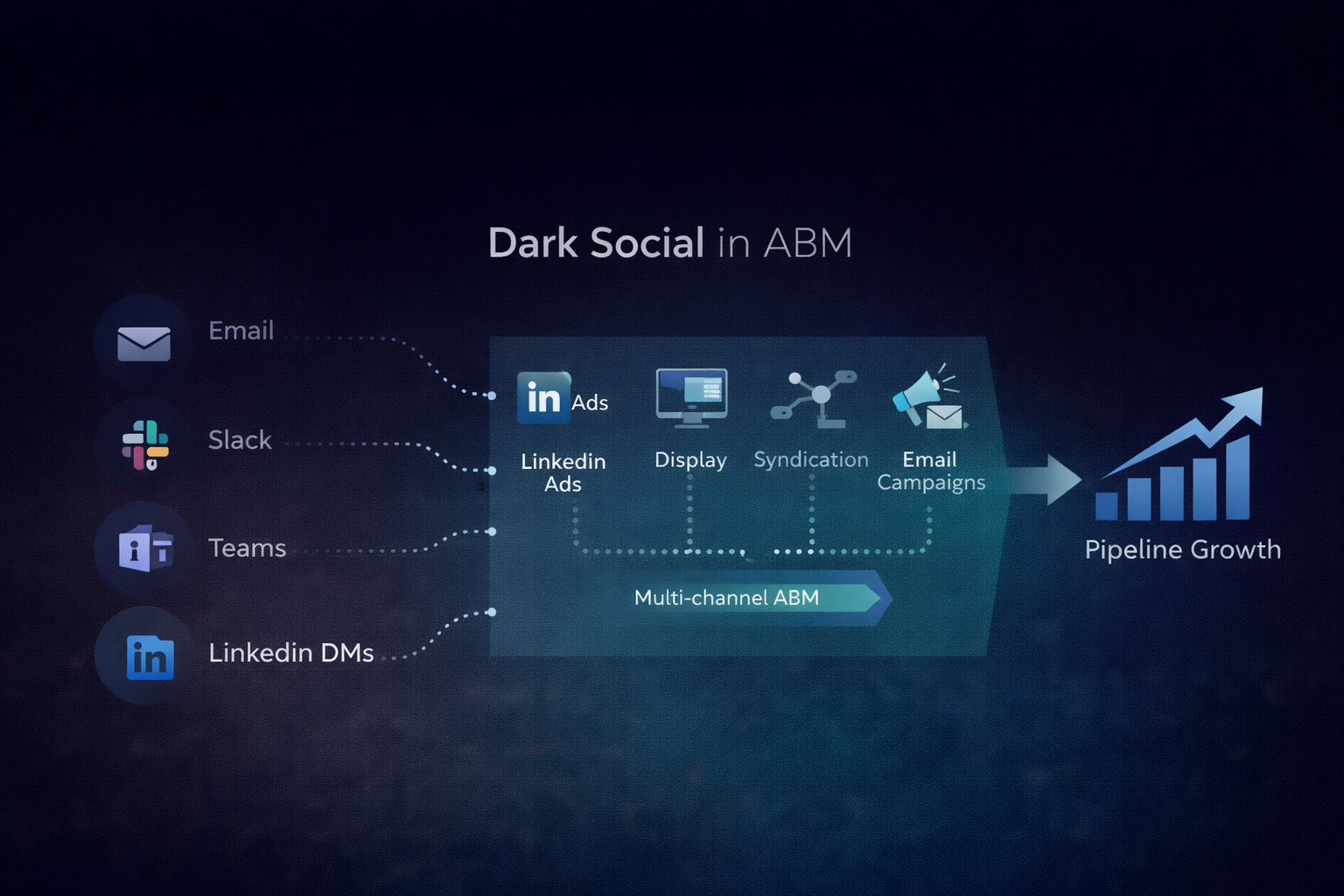
Dark Social in B2B Marketing: Turning Invisible Engagement into ABM Pipeline Growth
-
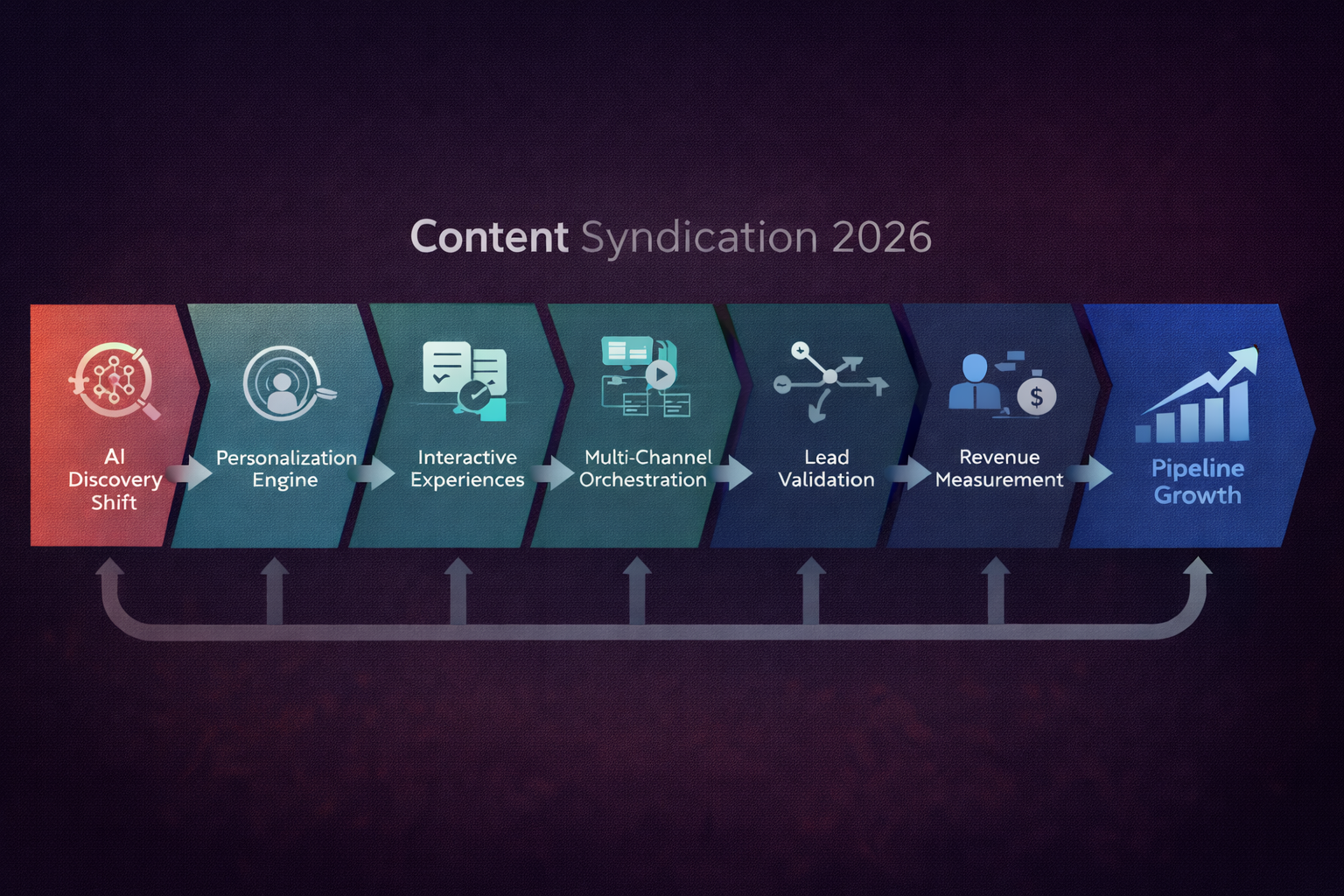
Content Syndication for ABM in 2026: 6 Strategic Shifts Driving Revenue, Not Just Leads
Get the Right Solution You Need from Our Expert Team Today
Quick, reliable support tailored to you.