LinkedIn ABM Strategy 2026: How to Influence Buying Committees in a Zero-Click World
LinkedIn has outgrown its role as a standard paid social platform for B2B marketers. Today, it functions as a high-impact influence environment where buying committees begin forming perceptions well before they exhibit trackable buying intent.
With more than a billion professionals on the platform, audience size alone no longer determines success. What matters is how those professionals engage — how they consume content, interpret expertise, and build familiarity over time.
As highlighted in 4 LinkedIn Trends Reshaping ABM: How to Influence Buying Committees in a Zero-Click World, buyer behavior is evolving rapidly. More content is consumed without clicks. Credibility is established directly within the feed. Meaningful discussions increasingly take place in private channels. Traditional attribution models struggle to capture early-stage influence.
For B2B executives, this shift presents a strategic imperative: LinkedIn must be repositioned from a tactical marketing channel to a core influence layer embedded within a broader account-based marketing (ABM) ecosystem.
What follows is a modern, executive-level framework for activating LinkedIn within a coordinated, multi-channel ABM strategy — one designed to shape perception early, build trust consistently, and generate measurable impact across the revenue pipeline.
The Zero-Click Reality: Influence Without Attribution
Today’s B2B buyers scroll, read, watch, and absorb — often without liking, commenting, or clicking.
This “zero-click” behavior creates two challenges:
Traditional engagement metrics underreport influence
Marketing teams struggle to attribute early awareness to pipeline
But this shift also creates opportunity.
In-feed exposure builds familiarity. Repeated visibility from credible voices establishes authority. Over time, that familiarity compounds — surfacing later as higher reply rates, warmer sales conversations, and faster deal velocity.
LinkedIn is no longer a traffic driver alone. It is a perception engine.
Trend 1: Human Thought Leadership Outperforms Brand Broadcasting
In an AI-saturated feed, authentic expertise stands out.
Generic brand messaging blends into the noise. First-hand experience cuts through it.
Buying committees increasingly evaluate credibility based on:
Real-world insights
Lessons learned
Industry commentary grounded in experience
Transparent discussions of challenges and trade-offs
Executive and practitioner voices now carry disproportionate influence. When leaders consistently share informed perspectives tied to industry realities, trust builds at the account level — even if visible engagement remains minimal.
Strategic Implication for ABM
Shift measurement from post-level metrics to account-level resonance:
Are multiple stakeholders from a target account consistently exposed?
Is visibility growing across decision-making roles?
Are sales conversations referencing LinkedIn exposure?
Thought leadership should anchor around account pain points — not product positioning.
Influence precedes intent.
Trend 2: Short-Form Video Builds Familiarity at Scale
Short-form video has become LinkedIn’s primary awareness format.
Why? Because it aligns with zero-click behavior.
Buyers can:
Watch a 30-second insight
Absorb a key idea
Continue scrolling
No click required.
Yet repetition builds recognition.
When buyers later encounter your brand via email, content syndication, display advertising, or direct outreach, that prior exposure creates subconscious familiarity.
Strategic Implication for ABM
Design short-form video as recognition infrastructure, not conversion triggers.
Align video themes to different buying committee roles:
Finance: ROI and risk mitigation
IT: Implementation complexity
Operations: Efficiency and scalability
Executives: Strategic impact
Track account-level exposure across channels rather than relying solely on video completion metrics.
Familiarity accelerates pipeline.
Trend 3: Employee Advocacy Is a Dark Social Multiplier
Not all influence happens publicly.
In B2B, much of the real buying conversation occurs in private:
Slack threads
Direct messages
Email forwards
Internal discussions
Employee advocacy extends brand presence into these untrackable environments.
When:
A solutions architect shares technical insight
A customer success manager discusses implementation lessons
A product leader explains trade-offs
The message carries peer credibility.
This horizontal influence often outweighs corporate messaging.
Strategic Implication for ABM
Structure advocacy intentionally:
Curate content by role and audience
Provide customizable messaging templates
Encourage personal perspective rather than copy-paste sharing
Track influence at the account level
Employee networks often include high-value stakeholders within target accounts.
Activate them strategically.
Trend 4: LinkedIn as an Early Signal Engine
Most teams treat LinkedIn as a channel to optimize. Leading ABM teams treat it as an early attention layer.
It is critical to distinguish:
Attention Signals
Profile views
Video exposure
Thought leadership visibility
Passive content consumption
Intent Signals
Asset downloads
Demo requests
Website visits
Form submissions
Attention signals indicate awareness. Intent signals indicate readiness.
By identifying rising attention within target accounts, teams can trigger coordinated cross-channel reinforcement:
Retargeted display campaigns
Targeted content syndication
Sales outreach informed by context
Executive engagement from leadership
LinkedIn becomes an early-warning system for account warming.
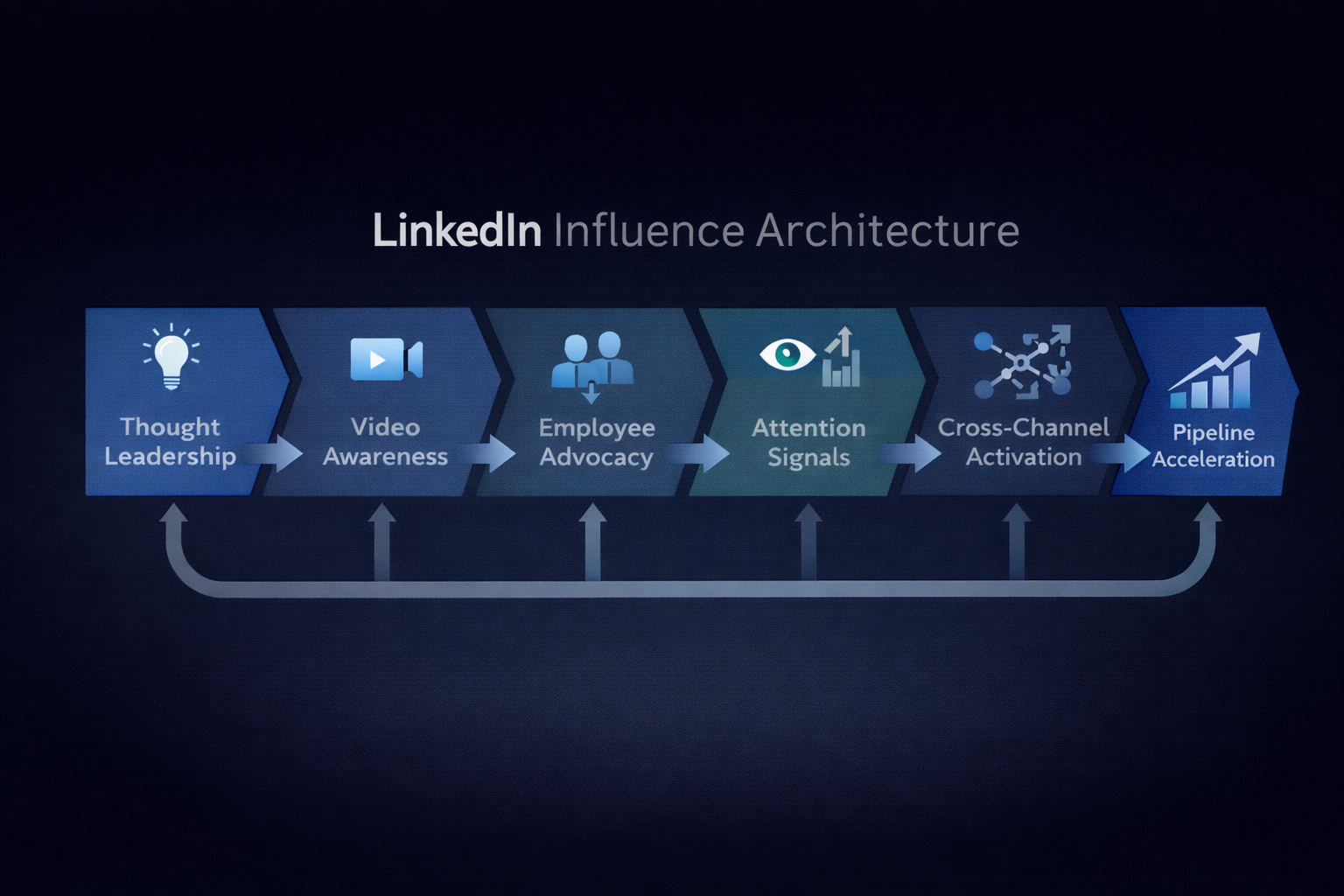
Designing LinkedIn as Part of an Influence Architecture
Winning ABM teams do not isolate LinkedIn performance. They integrate it.
A modern influence architecture includes:
Thought Leadership Layer – Executive and SME voices shaping perception
Video Awareness Layer – Short-form recognition building
Advocacy Layer – Peer-driven credibility amplification
Signal Layer – Account-level attention tracking
Cross-Channel Activation – Coordinated display, syndication, email, and sales follow-up
Each touchpoint reinforces the next.
The objective is not immediate conversion. It is cumulative influence.
Measurement: From Clicks to Correlation
Traditional LinkedIn metrics — likes, comments, CTR — no longer tell the full story.
Executive-level measurement must focus on:
Account coverage across buying committee members
Correlation between LinkedIn exposure and downstream engagement
Sales cycle acceleration
Pipeline velocity
Win rate improvement
When LinkedIn exposure consistently precedes opportunity creation, its strategic value becomes clear.
Measure correlation, not last-touch attribution.
From Channel Execution to Strategic Influence
The future of LinkedIn in ABM is not about posting more frequently or increasing ad spend. It is about designing influence systems.
Organizations that win:
Align messaging across channels
Empower authentic expert voices
Track account-level engagement patterns
Activate cross-channel reinforcement based on early signals
LinkedIn becomes the sensing layer within a broader ABM engine.
Not a standalone tactic — but strategic infrastructure.
If your current ABM strategy treats LinkedIn as just another social channel, you may be underutilizing its influence potential.
Our team works with B2B organizations to architect influence-driven ABM frameworks that integrate LinkedIn into a measurable, multi-channel growth system.
Let’s explore how your organization can move from channel execution to influence architecture.
FAQs
Zero-click refers to content consumption that happens entirely within the LinkedIn feed without users clicking through to external sites.
Repeated exposure builds familiarity and trust, which later influences sales conversations and brand preference — even without visible engagement.
Attention signals indicate awareness (e.g., video views, profile visits). Intent signals reflect readiness to buy (e.g., demo requests, downloads).
Yes. Peer-driven content shared by employees often enters private “dark social” environments where key buying discussions occur.
Focus on account-level coverage, signal correlation, pipeline impact, and sales velocity rather than individual post metrics.
Recent Blogs
-
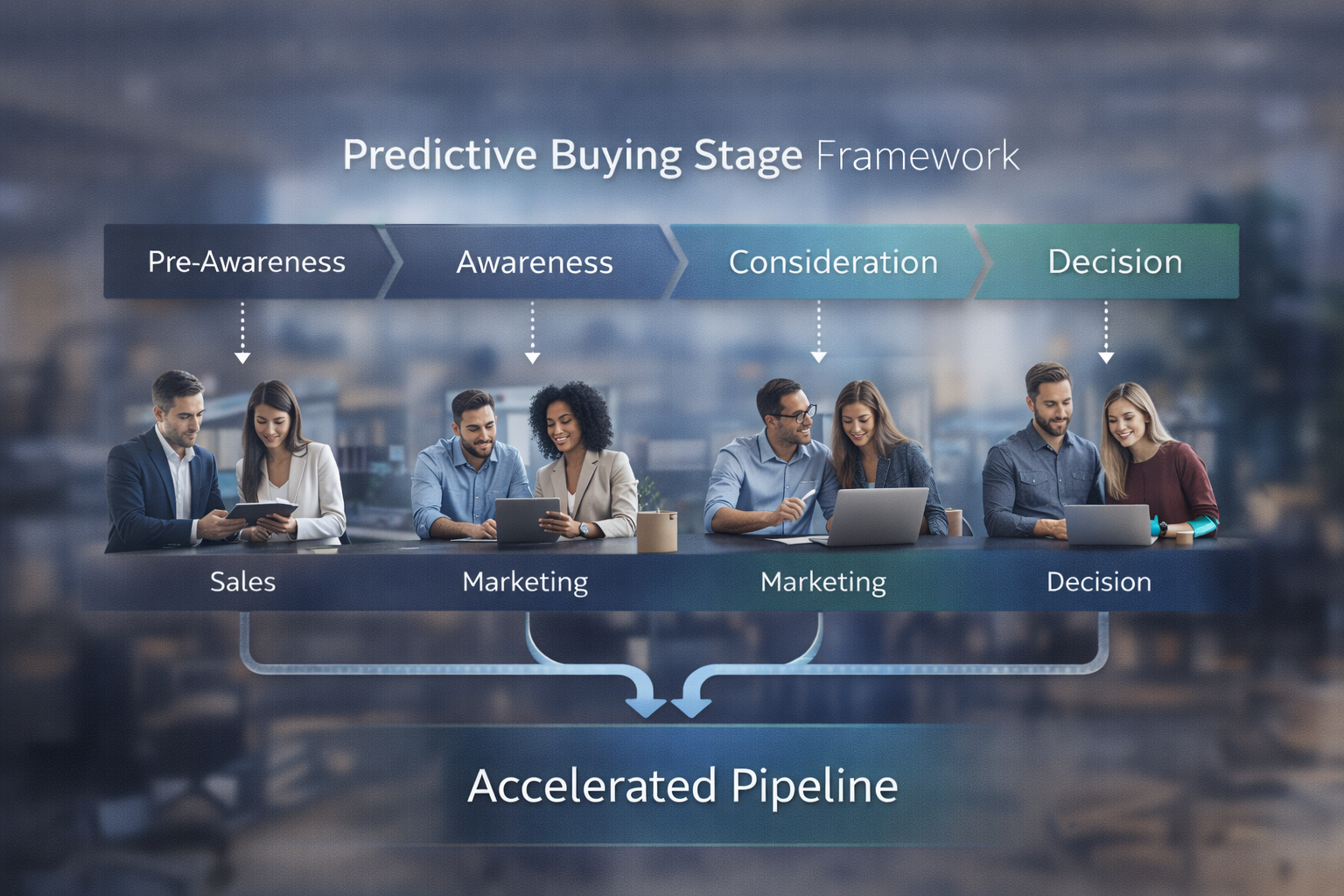
Predictive Buying Stage Intelligence: Aligning Sales and Marketing for Smarter B2B Revenue Growth
-
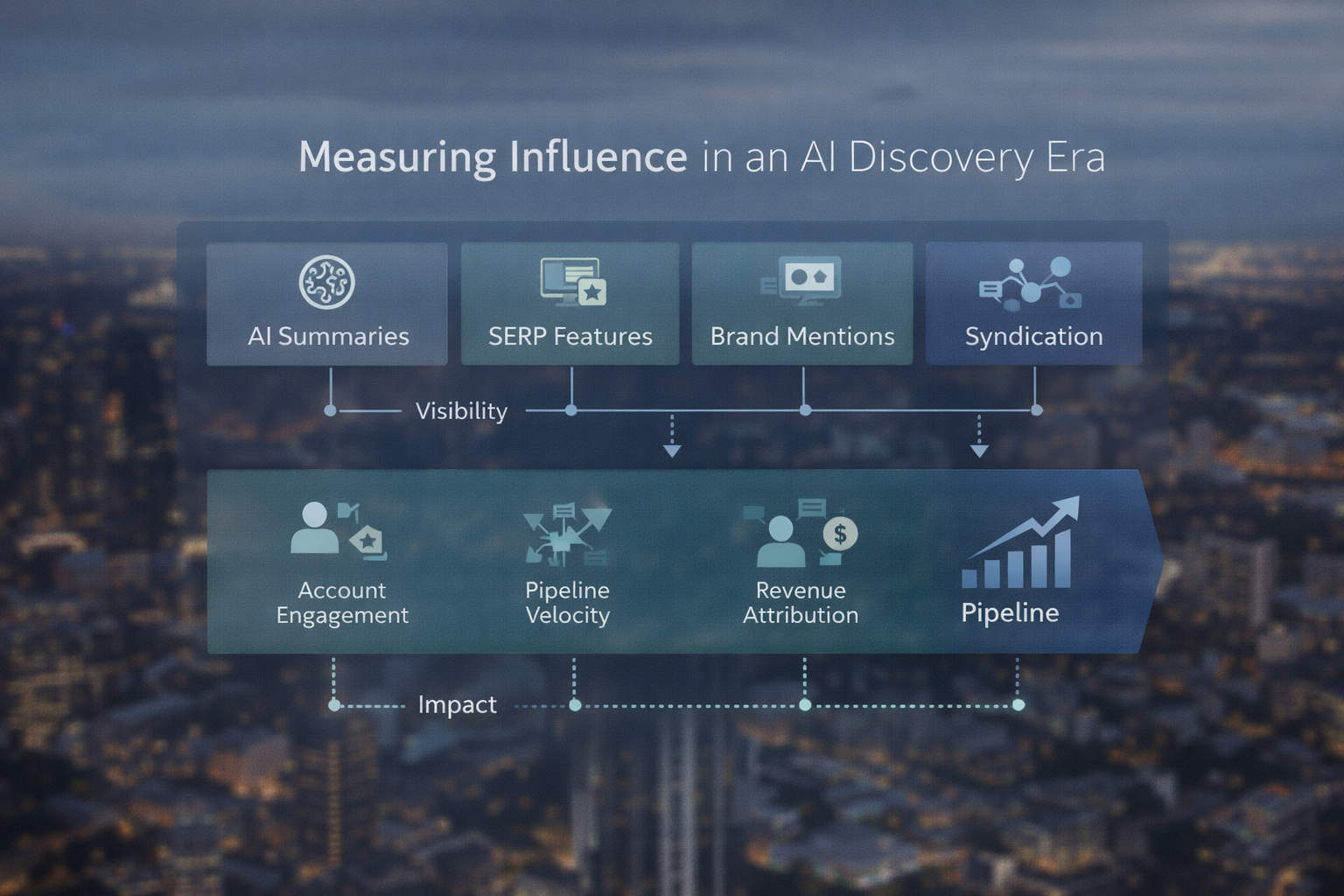
Measuring B2B Marketing Performance in an AI-Driven, Zero-Click Landscape
-
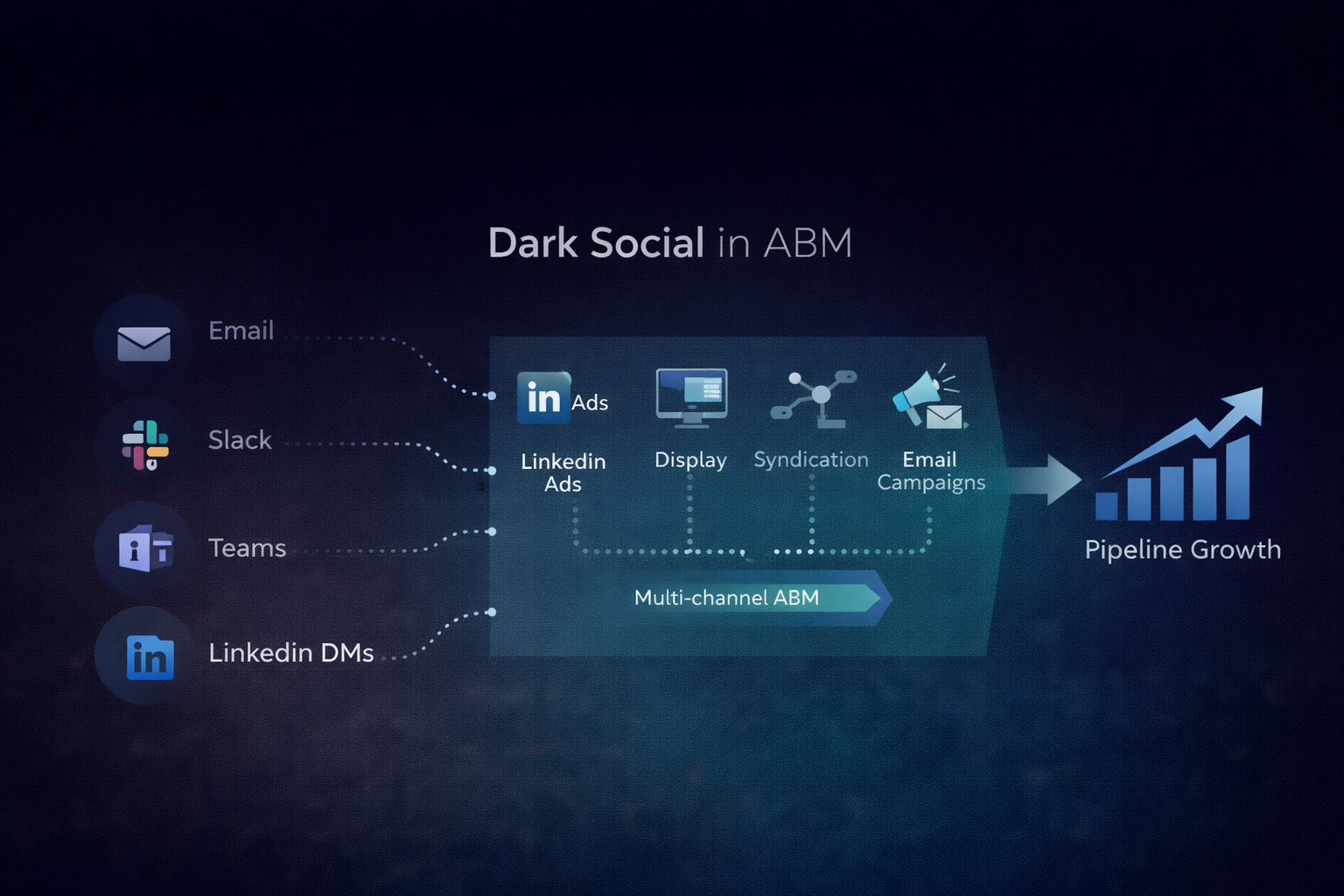
Dark Social in B2B Marketing: Turning Invisible Engagement into ABM Pipeline Growth
-
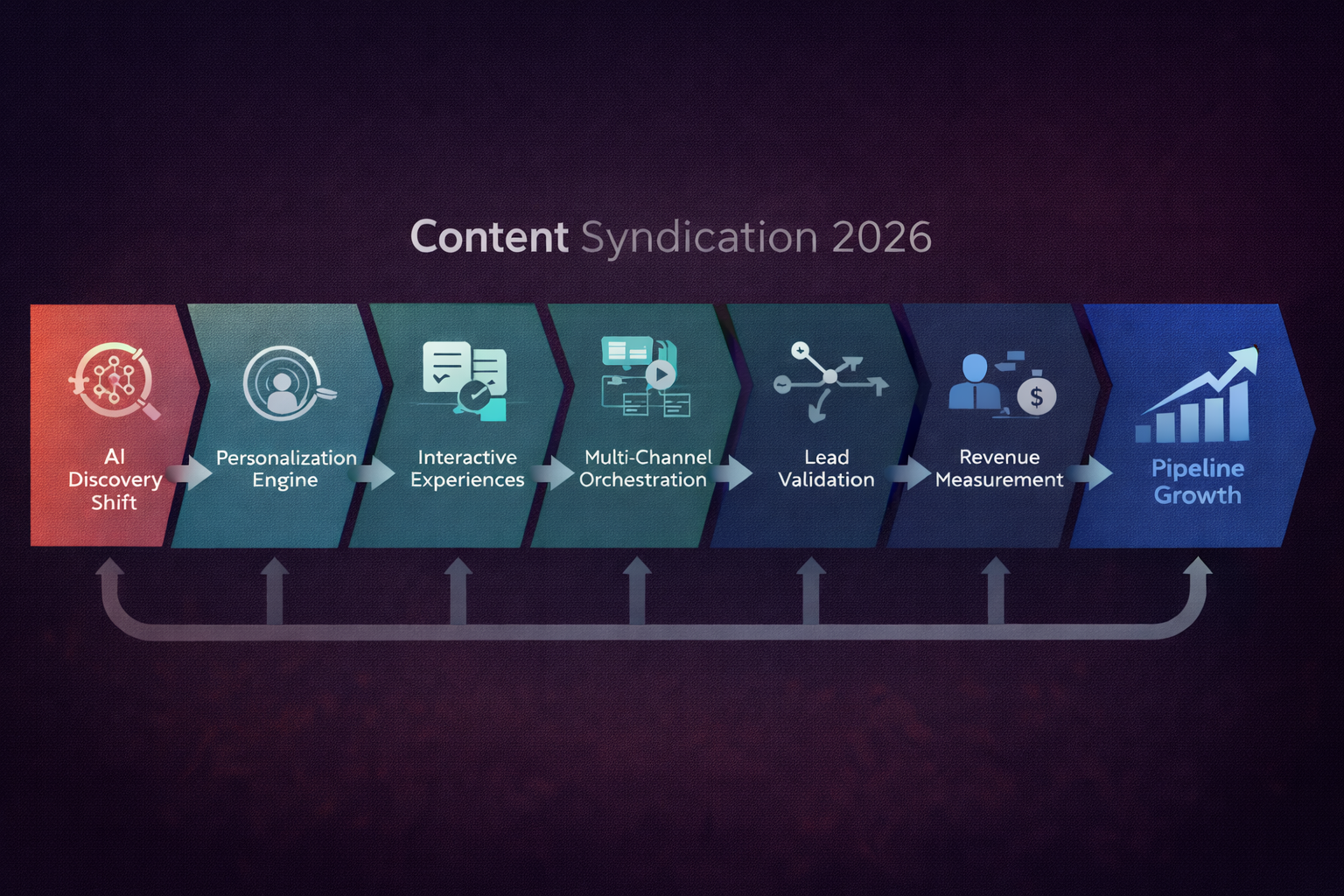
Content Syndication for ABM in 2026: 6 Strategic Shifts Driving Revenue, Not Just Leads
Get the Right Solution You Need from Our Expert Team Today
Quick, reliable support tailored to you.