Measuring B2B Marketing Performance in an AI-Driven, Zero-Click Landscape
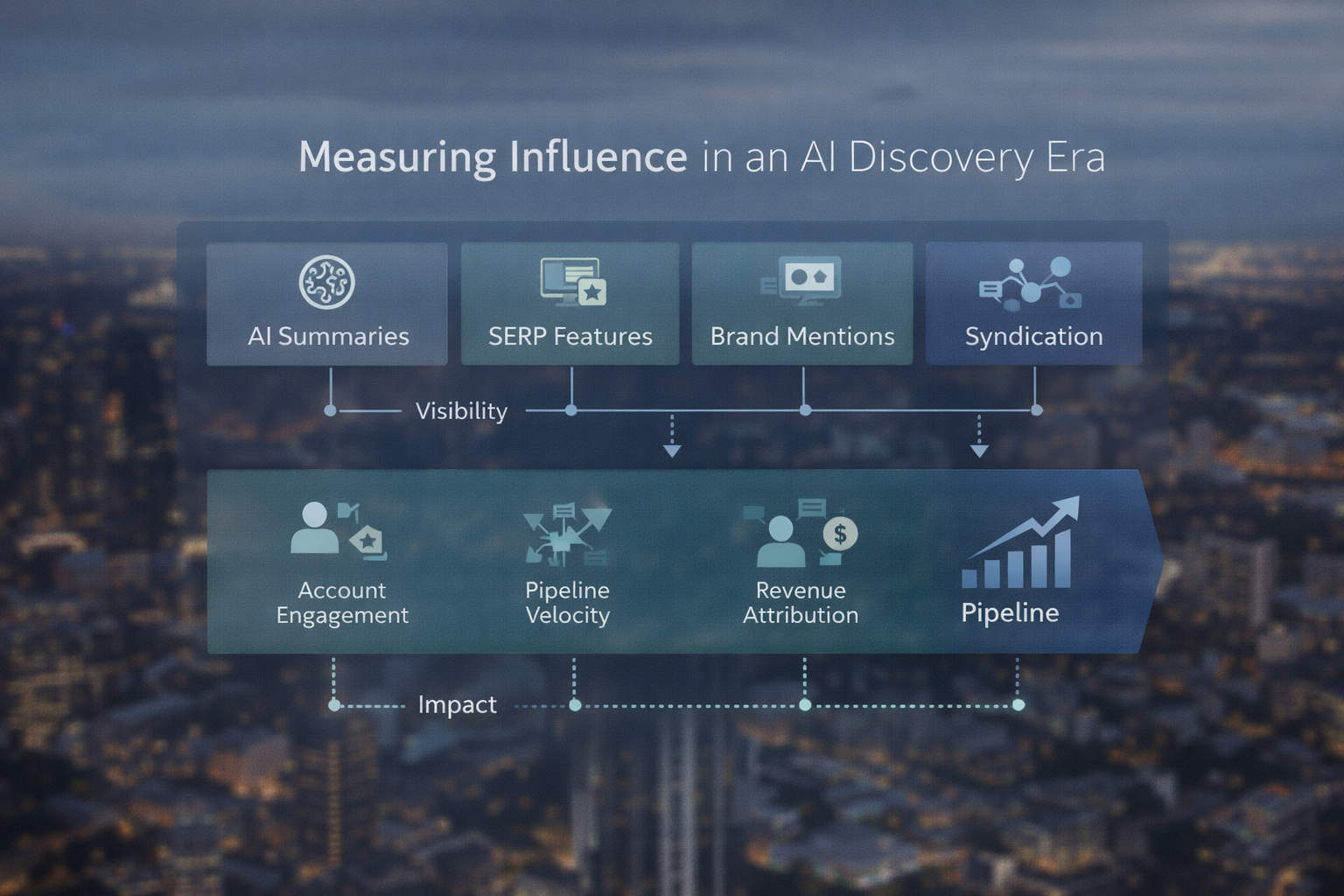
For years, B2B marketing success was measured through a traffic-centric lens.
Pageviews. Click-through rates. Cost per click. Time on site.
These metrics once served as reliable indicators of buyer interest. But the rise of AI-powered search, answer engines, and platform summaries has fundamentally reshaped how decision-makers discover and assess solutions. As highlighted in Measurement Best Practices for an AI-Driven Discovery Landscape, buyers now gather insights from AI overviews, featured snippets, syndicated content hubs, and conversational tools — often without ever landing on a brand’s website.
In this evolving, zero-click landscape, traffic alone no longer reflects true market influence.
The imperative for marketing leaders is clear: shift the focus from measuring isolated interactions to evaluating broader brand influence.
What follows is a forward-looking framework designed to help B2B organizations assess performance within today’s AI-mediated discovery environment.
The Zero-Click Shift: Visibility Without Traffic
Search engines and AI assistants now summarize information directly in results pages. Buyers often receive answers from:
AI-generated summaries
Featured snippets
Knowledge panels
Industry publications
Syndicated content platforms
A prospect may read about your solution multiple times before ever clicking your website — or they may convert later through a different channel entirely.
This does not reduce impact. It redistributes it.
Performance measurement must reflect how visibility shapes perception before interaction occurs.
1. Share of Voice (SOV): Your Authority Index
In a clickless landscape, visibility dominance matters more than isolated traffic spikes.
Share of Voice measures how frequently your brand appears across key category terms relative to competitors. If your organization consistently surfaces in industry conversations, AI models and search systems are more likely to reference your content.
Why It Matters
Repeated exposure builds cognitive trust. Buyers may not click immediately, but consistent presence signals authority.
How to Track It
Monitor keyword visibility using platforms such as SEMrush or Ahrefs
Track brand mentions relative to competitors
Calculate your percentage share across priority terms
For B2B leaders, SOV becomes a leading indicator of influence.
2. SERP Feature Presence: Influence at the Answer Level
In the AI era, appearing in a featured snippet can be more impactful than ranking first organically.
Search engine results pages now include:
Featured snippets
“People Also Ask” boxes
AI summaries
Knowledge panels
If your content appears in these spaces, it shapes buyer understanding before any click happens.
Strategic Implication
Being selected for answer surfaces indicates algorithmic trust. That trust compounds over time.
Track impression share within these features, not just click-through rates.
3. AI Citation Tracking: Monitoring Machine-Level Authority
AI assistants increasingly synthesize information from trusted sources. If your brand is cited in:
AI-generated search summaries
Conversational AI responses
Industry-focused LLM outputs
you are influencing perception at scale.
Why This Matters
AI citation functions as a modern form of endorsement. Buyers often trust summarized insights without verifying original sources.
How to Measure
Monitor AI platform mentions manually and through AI monitoring tools
Track citation frequency, accuracy, and context
Evaluate sentiment alignment
Authority in AI ecosystems translates into early-stage buyer trust.
4. Brand Mentions: Distributed Credibility Signals
Authority is no longer centralized on owned channels.
Mentions across:
Industry publications
Analyst blogs
LinkedIn articles
Review platforms
Community forums
contribute to reputation signals that feed both human perception and AI ranking systems.
Measurement Framework
Use media monitoring tools to track earned coverage
Implement social listening for unprompted references
Evaluate qualitative sentiment alongside volume
In a zero-click environment, distributed credibility strengthens discoverability.
5. Account-Level Lead Progression: Visibility That Converts
Influence ultimately matters only if it contributes to revenue.
Even if early exposure is invisible, its impact appears in account behavior.
For example:
A target account reads an AI summary referencing your brand
Multiple stakeholders later download a syndicated whitepaper
The account requests a demo weeks later
The click may occur late — but the influence began earlier.
How to Track It
Use CRM and ABM platforms to monitor account progression
Map early exposure signals to downstream actions
Compare pipeline velocity between influenced and non-influenced accounts
Lead progression is the bridge between awareness and revenue.
6. Multi-Channel Attribution: Connecting Invisible Touchpoints
In today’s environment, buyer journeys span:
Search engines
AI assistants
Content syndication
LinkedIn campaigns
Display advertising
Email nurture programs
Single-touch attribution models fail to capture this complexity.
Modern measurement requires:
Data-driven attribution models
Cross-channel engagement tracking
Account-level orchestration analysis
A buyer may first encounter your brand in an AI summary, later see it referenced in a syndicated report, and finally convert via a LinkedIn ad.
Attribution must assign value across the entire journey — not just the final click.
The Executive Shift: From Interaction Metrics to Influence Metrics
The new performance hierarchy looks different.
Instead of prioritizing:
Pageviews
CTR
Bounce rate
Executive teams should focus on:
Category share of voice
AI visibility
SERP feature presence
Account engagement depth
Pipeline velocity
Revenue attribution
Clicks measure activity. Influence measures impact.
Designing for Recognition, Not Just Traffic
In an AI-driven landscape, your content must be:
Authoritative enough to be cited
Structured for machine readability
Distributed across trusted ecosystems
Reinforced through multi-channel engagement
Visibility is no longer confined to your website. It exists across an interconnected discovery network.
Organizations that adapt measurement frameworks accordingly gain strategic clarity.
Those that cling to traffic-centric metrics risk underestimating their true influence — or worse, misallocating budget.
From Click-Based Reporting to Influence-Based Strategy
Zero-click discovery is not a threat. It is an evolution.
Buyers still research. They still compare. They still evaluate credibility.
What has changed is where those interactions occur.
By tracking share of voice, AI citations, distributed brand mentions, account progression, and multi-channel attribution, B2B leaders can gain a holistic view of marketing effectiveness — even when engagement happens before the first click.
If your current reporting framework centers primarily on traffic metrics, it may be time to recalibrate.
Our team works with B2B organizations to build measurement models aligned to modern buyer behavior — ensuring visibility translates into measurable pipeline growth.
Let’s explore how your marketing analytics can evolve from interaction tracking to influence intelligence.
FAQs
Zero-click marketing refers to content discovery where buyers consume information through AI summaries or SERP features without visiting the original website.
Because buyers increasingly form opinions through AI and answer surfaces before clicking, traffic alone no longer reflects total influence.
Track citations across AI platforms, monitor brand mentions in AI-generated summaries, and evaluate sentiment and frequency.
Share of Voice and account-level progression metrics are leading indicators of influence and downstream revenue impact.
No. It shifts when and how influence occurs. Proper multi-channel attribution connects early exposure to later conversions.
Recent Blogs
-
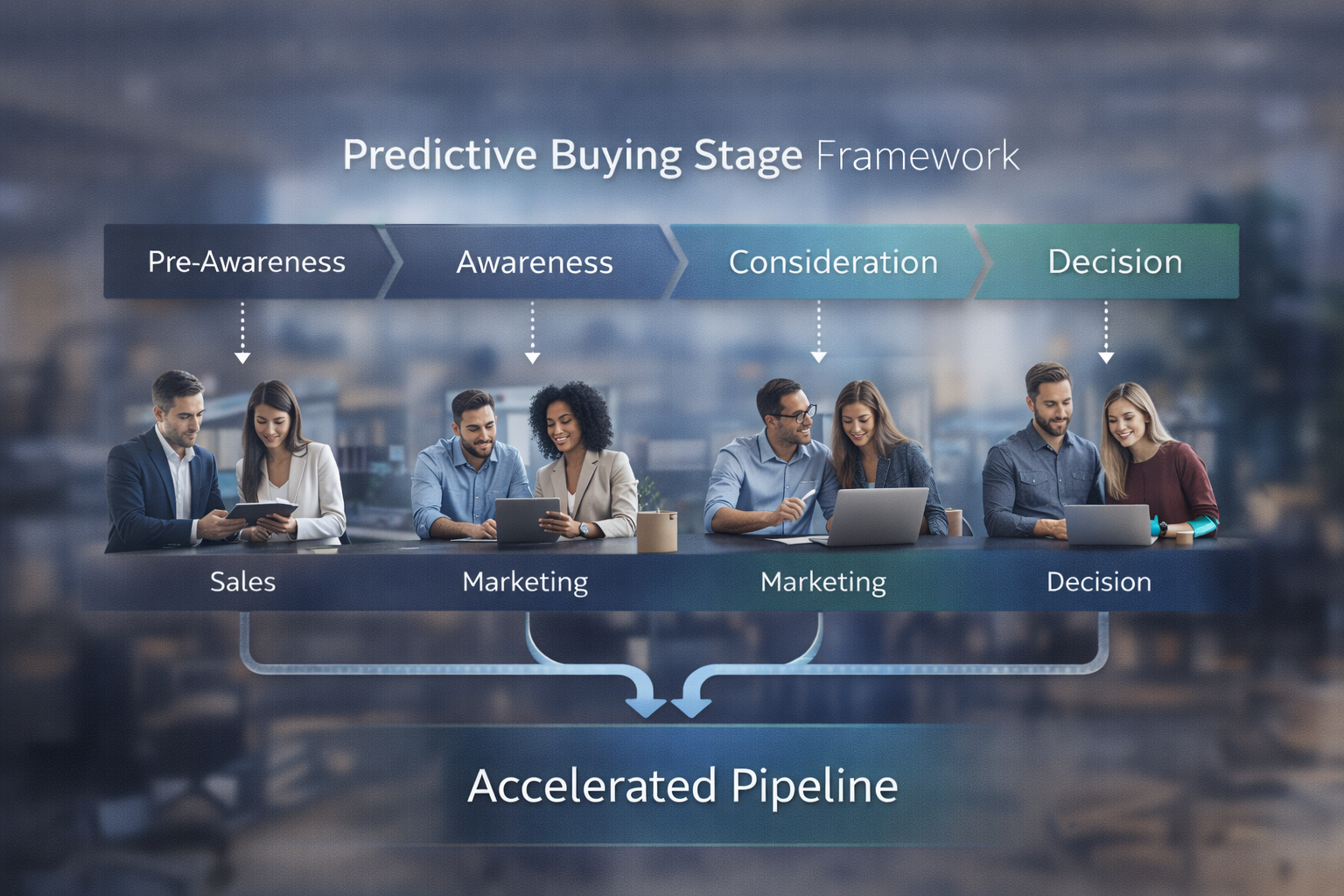
Predictive Buying Stage Intelligence: Aligning Sales and Marketing for Smarter B2B Revenue Growth
-
Measuring B2B Marketing Performance in an AI-Driven, Zero-Click Landscape
-
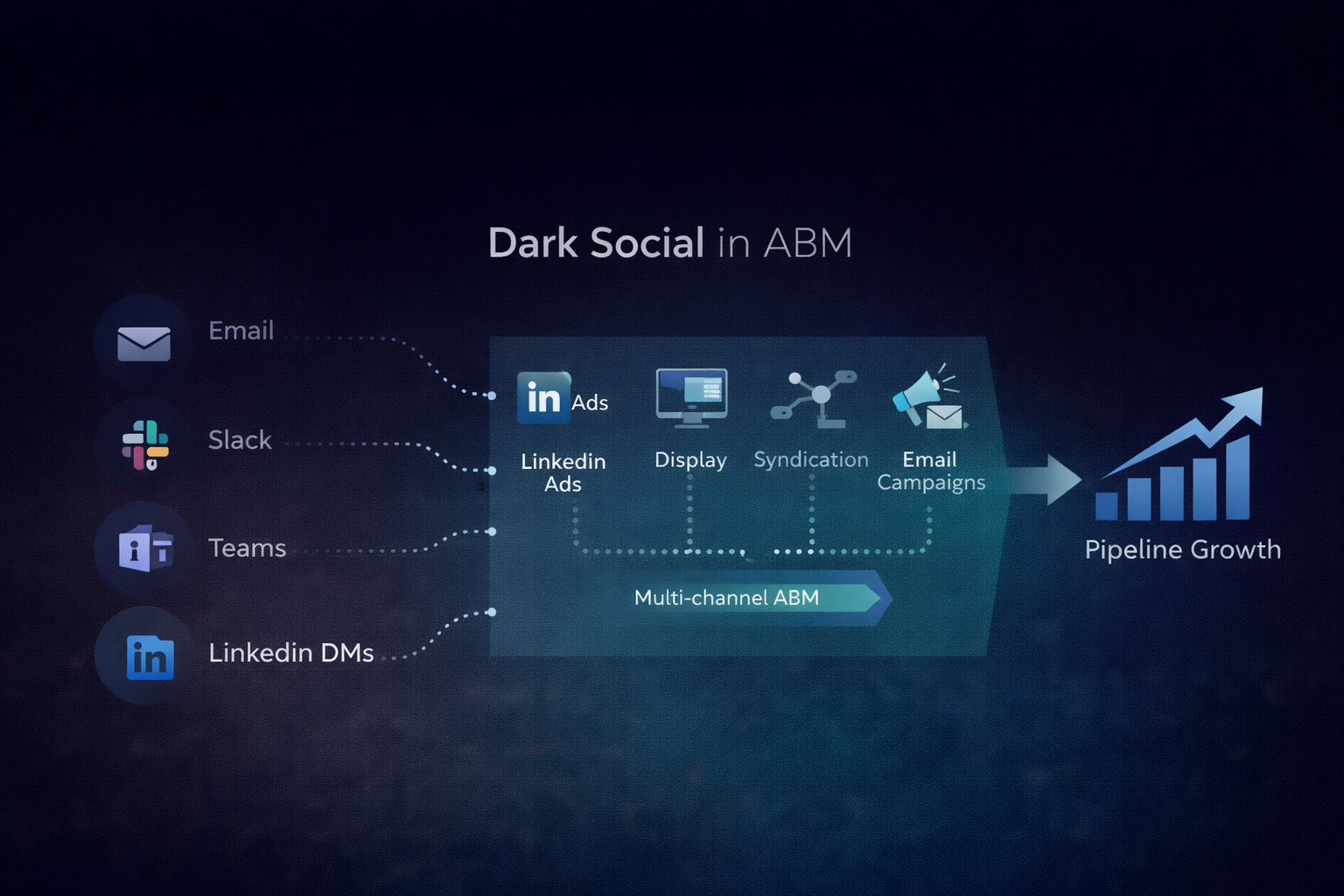
Dark Social in B2B Marketing: Turning Invisible Engagement into ABM Pipeline Growth
-
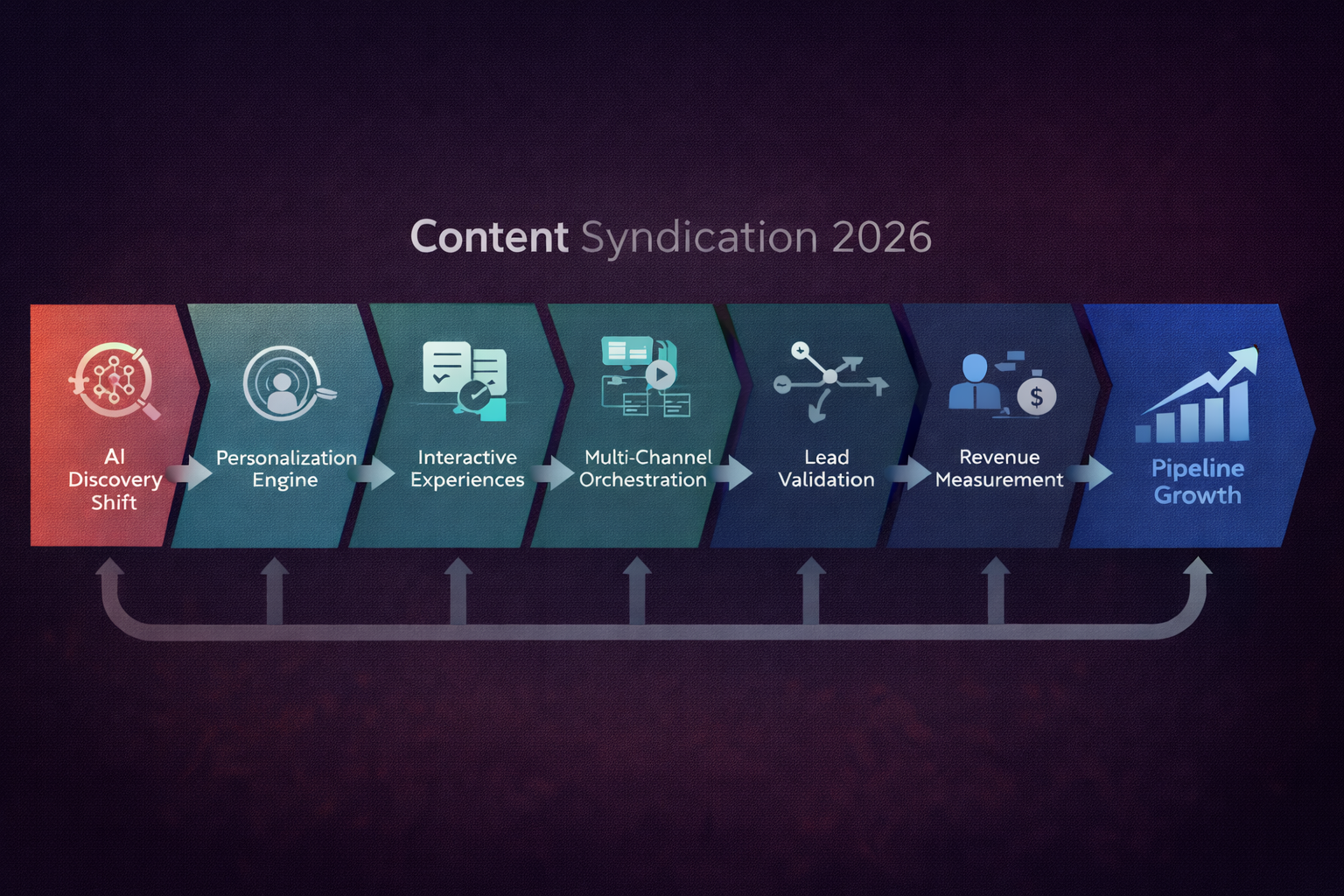
Content Syndication for ABM in 2026: 6 Strategic Shifts Driving Revenue, Not Just Leads
Get the Right Solution You Need from Our Expert Team Today
Quick, reliable support tailored to you.