Multi-Channel Display Advertising Strategy for B2B Growth: A Data-Driven Playbook
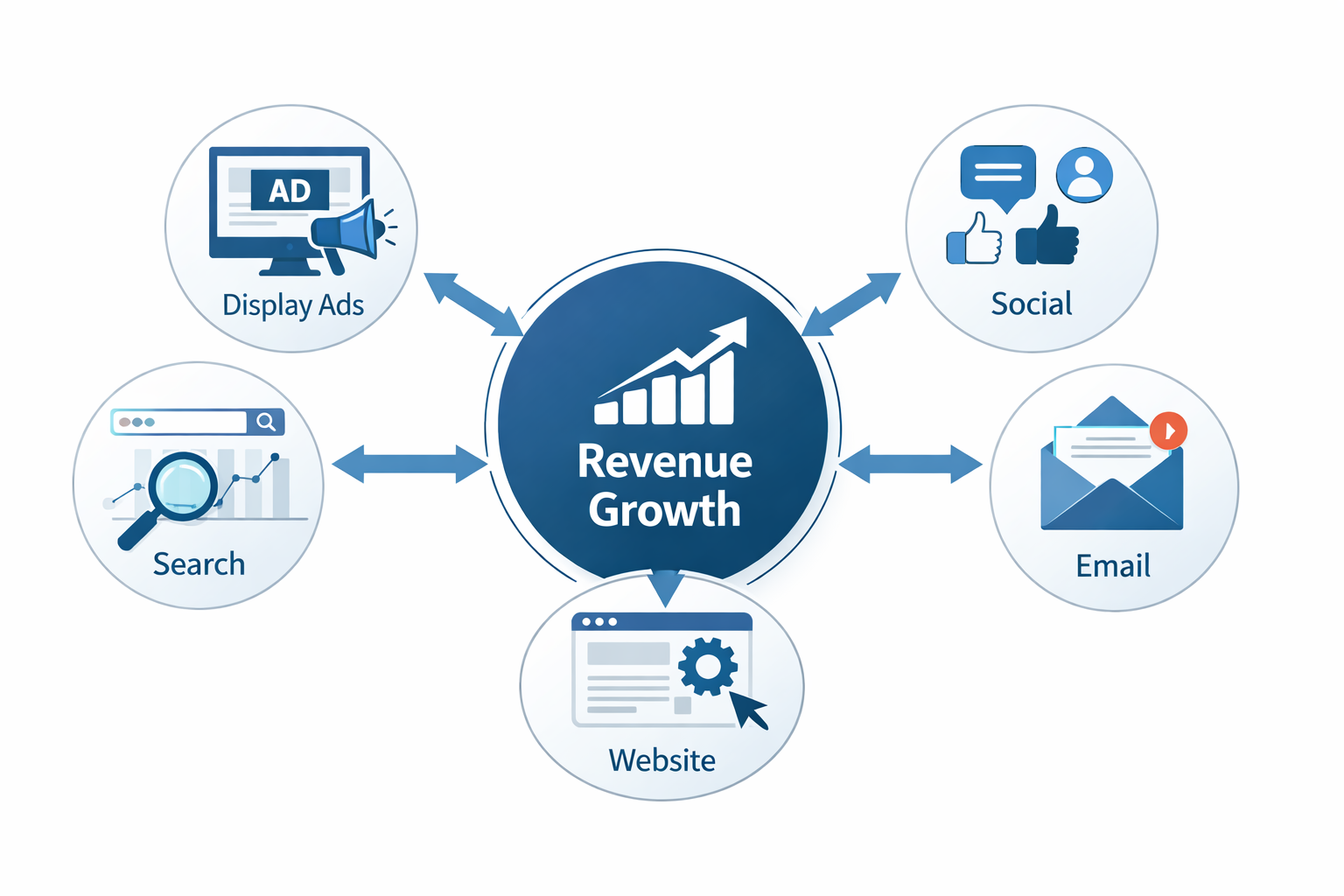
Multi-Channel Display Advertising: A Strategic Framework for B2B Revenue Growth
In today’s B2B landscape, attention is fragmented, buying committees are larger, and decision cycles are longer. Running isolated campaigns is no longer enough. To influence complex buying journeys, brands must orchestrate consistent, data-driven messaging across multiple touchpoints.
Display advertising plays a critical role in this ecosystem. When strategically integrated with search, social, email, and content marketing, it becomes a powerful growth accelerator — not just an awareness tool.
This guide outlines a modern, executive-level approach to building a multi-channel display advertising strategy that drives qualified pipeline and measurable ROI.
Why Multi-Channel Is No Longer Optional
B2B buyers don’t convert after a single interaction. Research consistently shows that decision-makers engage with multiple content assets across different platforms before initiating a conversation.
Relying solely on one channel limits reach and reduces influence across the buyer journey. A coordinated multi-channel strategy ensures your brand:
Stays visible during research phases
Reinforces credibility through repeated exposure
Engages multiple stakeholders within target accounts
Accelerates trust and purchase readiness
Display advertising becomes significantly more powerful when it supports — and is supported by — other digital initiatives.
Aligning Display Advertising with Search Intent
Search marketing captures active demand. Display marketing shapes and reinforces that demand.
When these two work together, your brand dominates both discovery and intent phases.
Strategic Integration Tactics:
1. Intent-Based Targeting
Use search query insights to inform display audience segments. If prospects are actively researching specific keywords, your display campaigns should mirror those themes.
2. Retargeting High-Value Visitors
Visitors who arrive via search but do not convert represent warm opportunities. Strategic retargeting keeps your brand visible while they continue evaluating solutions.
3. Layered Audience Bidding
Adjust search bids for users previously exposed to display ads. Prior brand familiarity often improves conversion probability.
This alignment ensures consistent messaging across both awareness and intent-driven interactions.
Amplifying Display Impact Through Social Channels
Social platforms provide behavioral and demographic depth that enhances display performance.
Rather than treating social and display as separate silos, leading B2B marketers integrate them strategically.
Advanced Approaches:
Account-Based Advertising (ABA)
Deploy coordinated display and paid social campaigns targeting decision-makers within high-value accounts.
Sequential Messaging
Introduce brand positioning through display ads and reinforce thought leadership via social content engagement.
Social Proof Integration
Incorporate testimonials, analyst mentions, or client wins into display creative to strengthen credibility.
In B2B environments, trust is currency. Multi-channel reinforcement builds that trust faster.
Integrating Email Marketing for Deeper Personalization
Email remains one of the most controllable and personalized B2B channels. When paired with display advertising, it creates a powerful nurture engine.
How to Combine Both Effectively:
Behavioral Segmentation
Use email engagement data to create refined display audiences. Highly engaged subscribers can receive advanced solution-focused messaging.
Lead Re-Engagement
Inactive email contacts can be reactivated through strategic display campaigns promoting high-value content or event invitations.
Lifecycle Alignment
Align display creatives with the stage of the buyer journey reflected in email workflows.
This coordinated personalization increases both relevance and conversion velocity.
Leveraging Content Marketing to Fuel Display Campaigns
Display advertising should not always push direct sales offers. In B2B, education drives influence.
High-performing strategies promote valuable content assets through display placements to attract and nurture prospects.
Effective Use Cases:
Whitepaper or research report promotion
Webinar and virtual event registrations
Industry trend insights
Case studies targeting specific verticals
Native-style placements can blend educational messaging within relevant digital environments, increasing engagement and credibility.
The result: higher-quality leads entering the funnel with stronger context and intent.
Website Experience: The Conversion Multiplier
Even the most optimized display campaign will underperform if landing experiences are weak.
Your website must translate attention into action.
Key Optimization Areas:
Speed and Performance
B2B decision-makers expect seamless digital experiences.
Clear Value Propositions
Messaging must align precisely with the display ad promise.
Strong Calls-to-Action
Guide visitors toward defined next steps: demo requests, consultations, or gated content.
Conversion Tracking and Analytics
Every interaction must be measurable to optimize campaign performance over time.
Display ads drive traffic. Optimized websites convert it.
The Metrics That Matter in B2B Display Advertising
Executives demand measurable impact. Vanity metrics alone are insufficient.
While impressions and clicks provide visibility insights, strategic marketers prioritize performance metrics aligned with revenue outcomes.
Critical Performance Indicators:
Click-Through Rate (CTR) for creative effectiveness
Conversion Rate for landing page performance
Cost Per Qualified Lead (CPQL)
Cost Per Acquisition (CPA)
Account Engagement Metrics (for ABM campaigns)
Pipeline Influence and Revenue Attribution
Data-driven optimization separates average campaigns from scalable growth engines.
Using Intent Data for Precision Targeting
Modern B2B marketing thrives on intelligence. Intent data identifies companies actively researching relevant topics — before they fill out a form.
When applied to display advertising, intent signals enable:
Prioritized targeting of in-market accounts
More relevant messaging aligned with active research themes
Higher conversion rates through contextual precision
Advanced analytics and machine learning models further refine targeting accuracy, reducing wasted spend and increasing campaign efficiency.
This approach shifts display advertising from broad awareness to strategic revenue acceleration.
Building a Cohesive Multi-Channel Framework
A high-performance multi-channel strategy requires orchestration, not fragmentation.
Successful B2B organizations align:
Unified messaging across platforms
Shared audience intelligence
Consistent brand positioning
Centralized analytics and reporting
When display advertising operates as part of a coordinated ecosystem, each channel reinforces the others — amplifying impact across the entire buyer journey.
FAQs
It refers to integrating display advertising with other digital channels such as search, social, email, and content marketing to create a coordinated and measurable customer journey.
Display ads can target specific accounts and stakeholders, reinforcing messaging across buying committees and increasing account engagement.
Yes. Display campaigns help maintain visibility and nurture prospects over extended evaluation periods, supporting long-term conversion strategies.
Intent data identifies companies actively researching relevant solutions, allowing for more precise targeting and improved conversion rates.
Track metrics such as cost per qualified lead, pipeline influence, conversion rates, and revenue attribution through integrated analytics platforms.
Recent Blogs
-
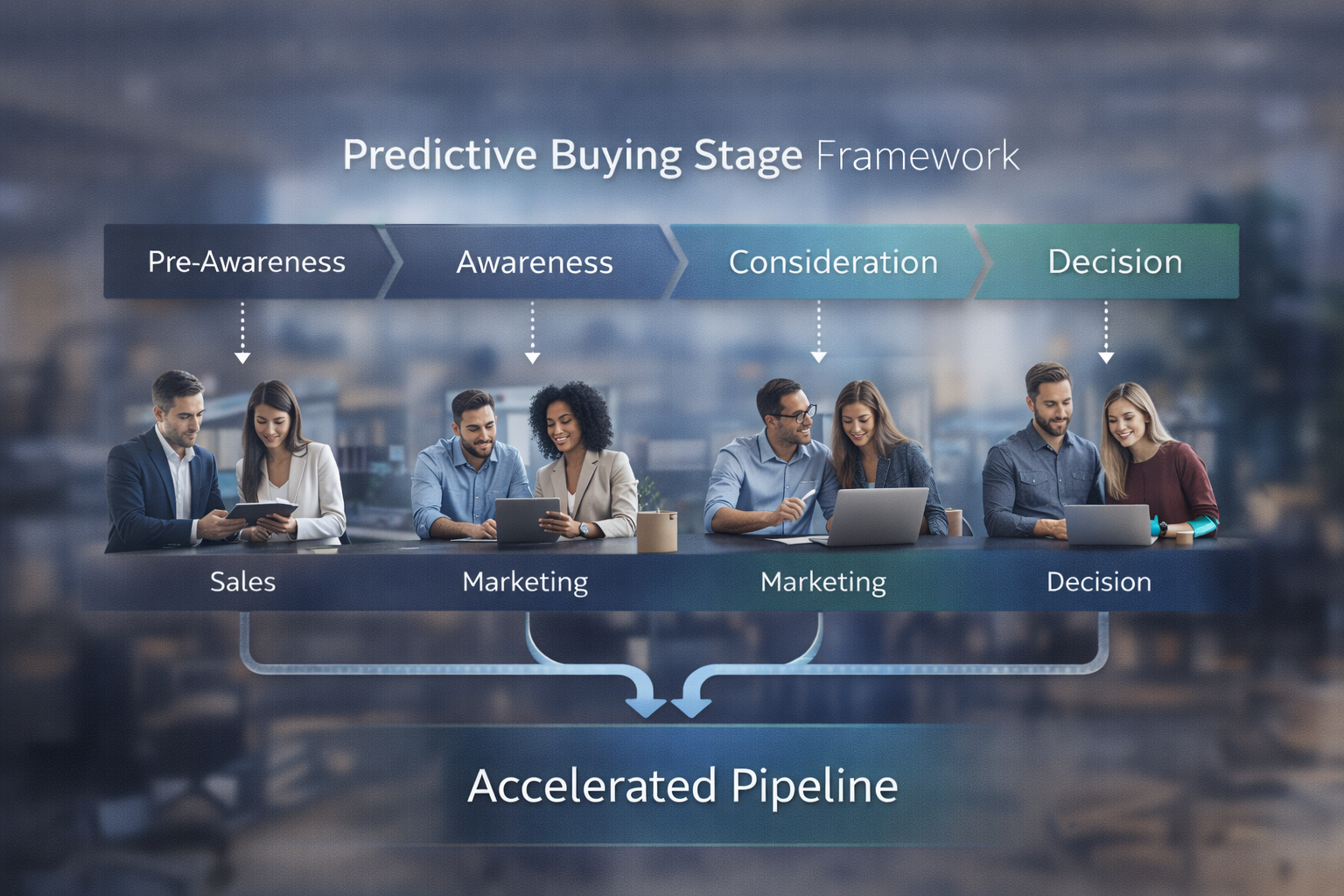
Predictive Buying Stage Intelligence: Aligning Sales and Marketing for Smarter B2B Revenue Growth
-
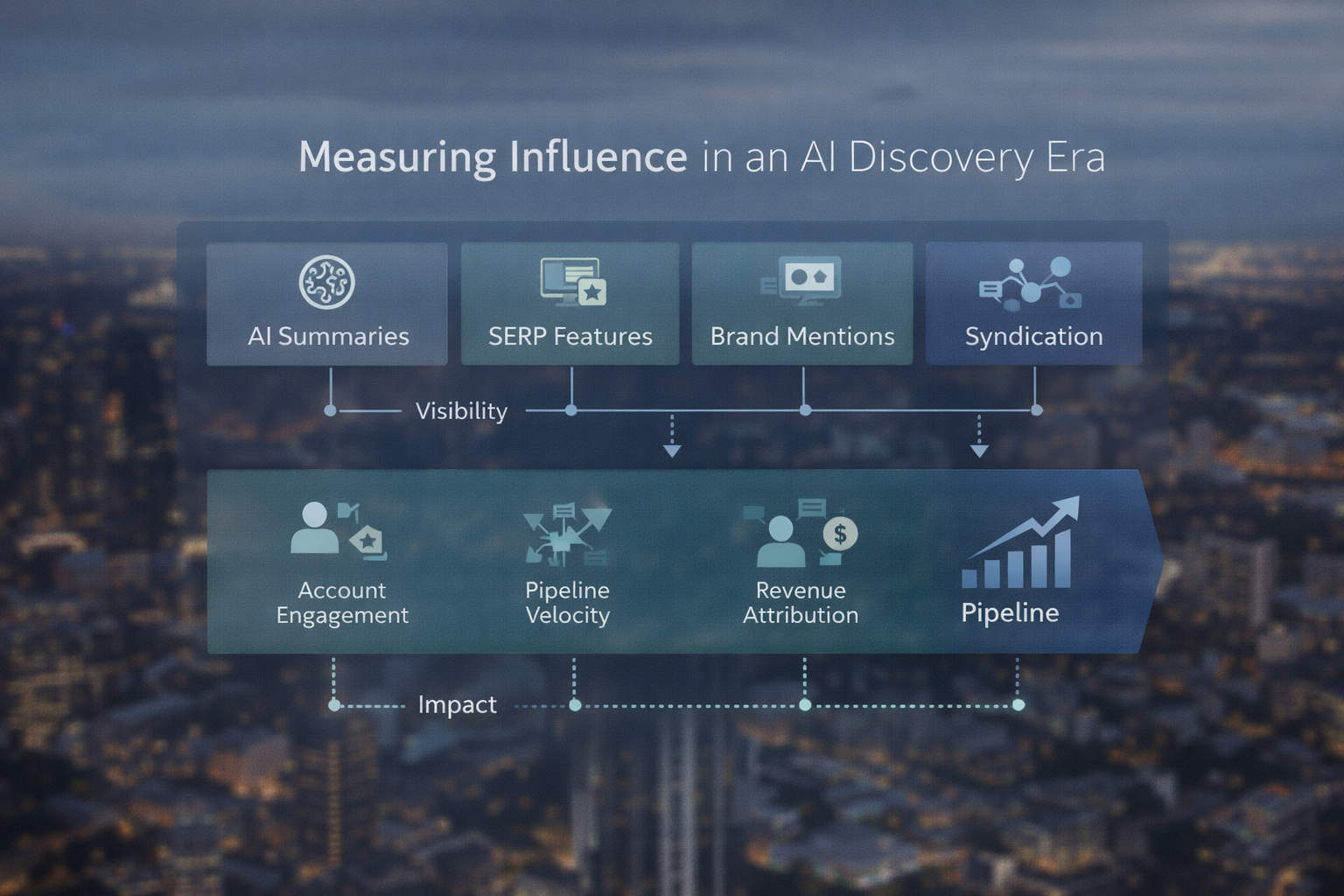
Measuring B2B Marketing Performance in an AI-Driven, Zero-Click Landscape
-
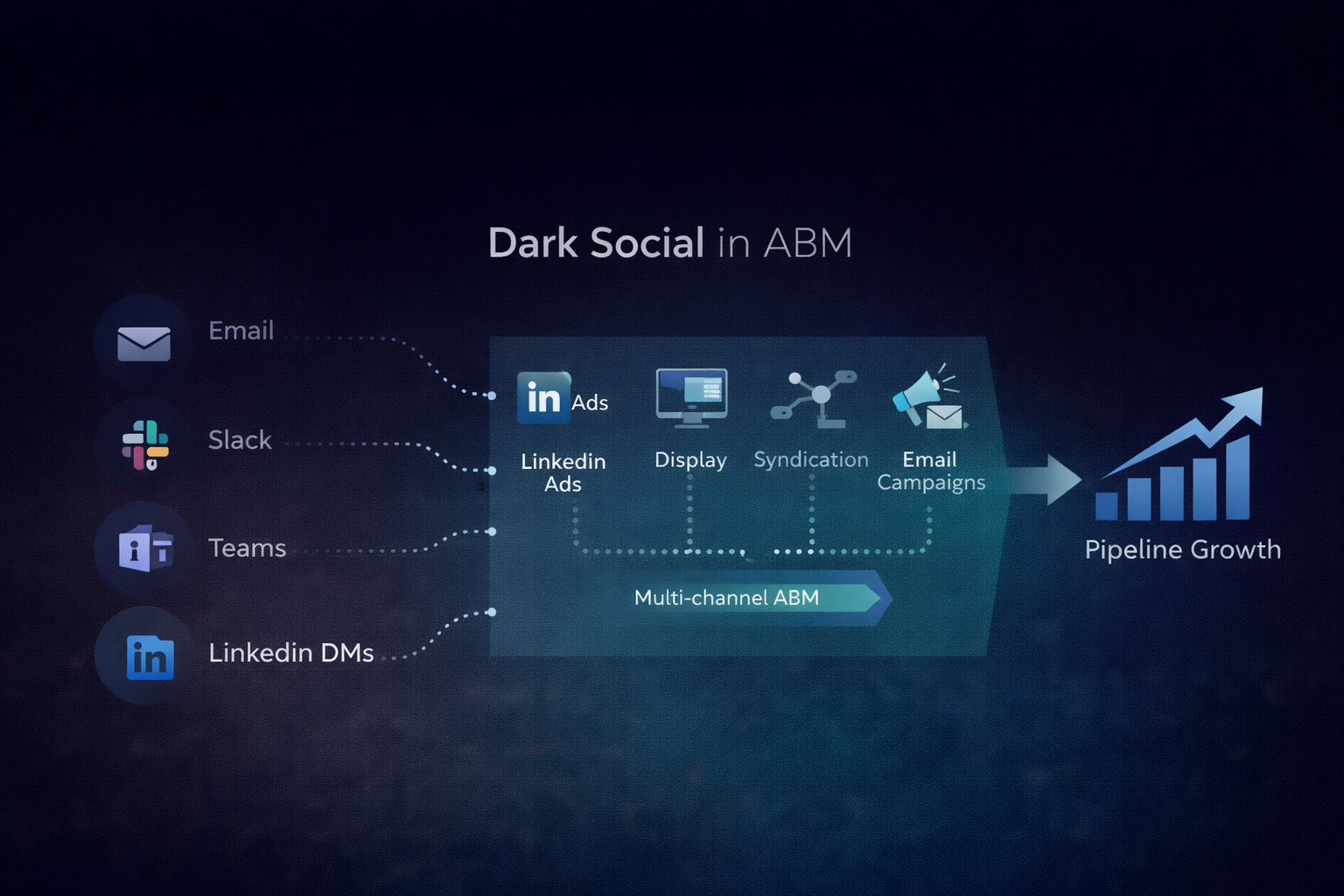
Dark Social in B2B Marketing: Turning Invisible Engagement into ABM Pipeline Growth
-
Content Syndication for ABM in 2026: 6 Strategic Shifts Driving Revenue, Not Just Leads
Get the Right Solution You Need from Our Expert Team Today
Quick, reliable support tailored to you.