What Defines High-Value B2B Content? A Strategic Framework for Market Leadership
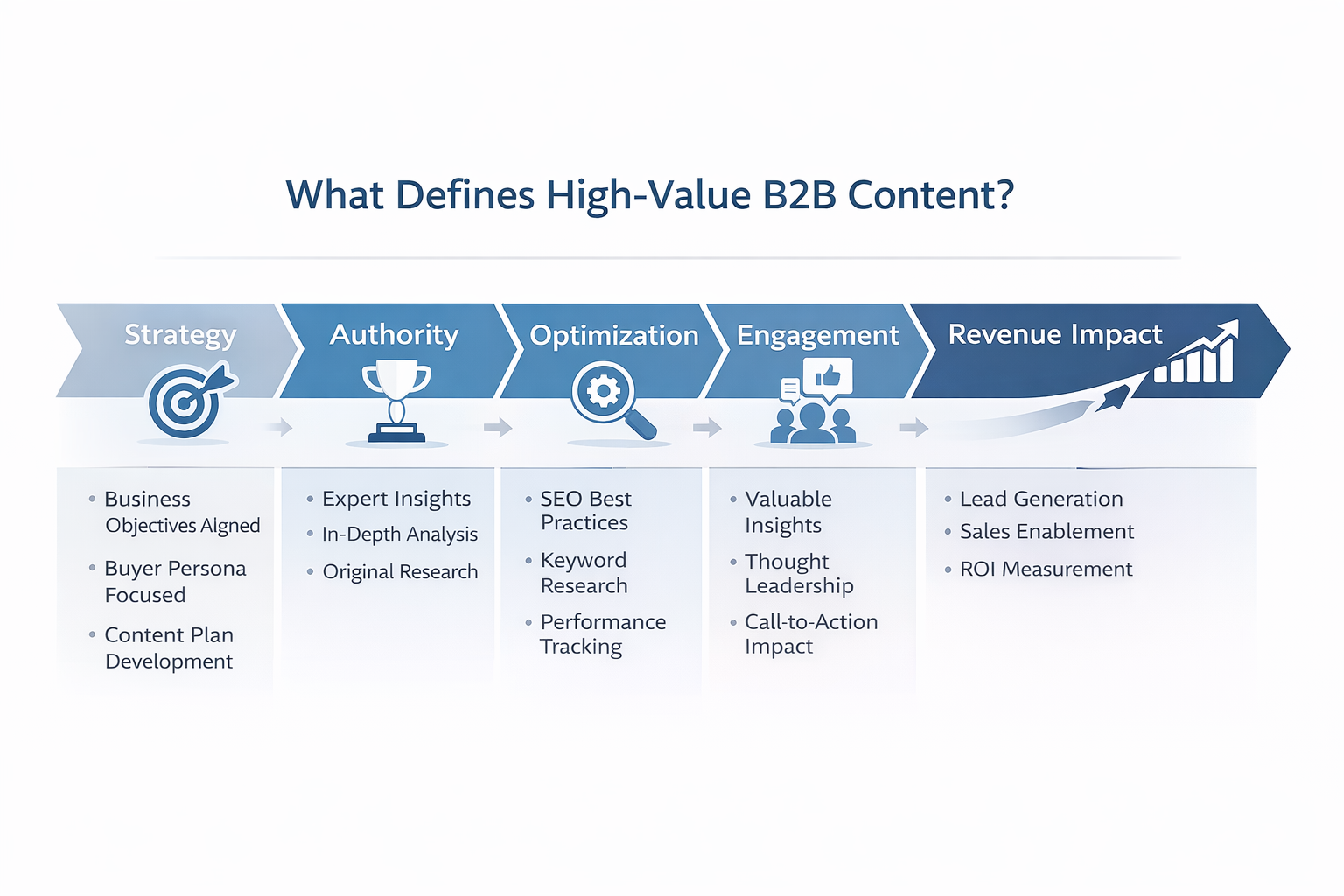
In B2B markets, content is not simply a marketing asset — it is a strategic business instrument. It influences buying committees, accelerates trust, and shapes revenue outcomes long before a sales conversation begins.
Yet, despite increased investment in content marketing, many organizations struggle to produce material that genuinely moves the needle. Publishing consistently is not the same as publishing effectively.
1. Strategic Clarity: Content With a Defined Business Purpose
High-value content begins with intent.
Every asset — whether a blog, whitepaper, case study, or video — must serve a defined objective:
Demand generation
Account-based marketing (ABM) support
Pipeline acceleration
Brand authority building
Customer retention
Without strategic alignment, content becomes noise.
Before creation, leadership teams should ask:
Which buyer persona are we targeting?
What stage of the buying cycle does this address?
What measurable outcome do we expect?
Content built on strategic clarity performs exponentially better than content created for volume.
2. Authority and Depth: Moving Beyond Surface-Level Insights
Decision-makers do not seek generic commentary. They seek perspective.
High-value B2B content demonstrates:
Industry expertise
Proprietary insight
Original analysis
Data-backed recommendations
Rather than repeating common narratives, premium content identifies knowledge gaps and provides differentiated viewpoints.
This is where thought leadership separates market leaders from content participants. When your organization provides meaningful analysis, it becomes a trusted advisor — not just a vendor.
3. Structural Excellence: Designed for Executive Consumption
Executives and procurement teams do not read line by line. They scan, evaluate, and extract.
Structured content enhances comprehension and retention.
Effective B2B formatting includes:
Clear hierarchy (H1, H2, H3)
Concise paragraphs
Logical flow
Bullet points for clarity
Data callouts
Well-structured content increases time-on-page, reduces bounce rates, and improves perceived professionalism.
Clarity is not simplification — it is precision.
4. Relevance and Relatability: Reflecting Real Business Challenges
High-performing content speaks directly to the realities of its audience.
It addresses:
Budget constraints
Digital transformation pressures
Competitive risks
Operational inefficiencies
Growth mandates
Relatable B2B content does not rely on emotional storytelling alone. Instead, it connects through shared industry pain points and validated experience.
When your content reflects the exact challenges executives are facing, it earns attention — and trust.
5. Discoverability: Built for Search and Strategic Visibility
Even the most insightful content is ineffective if it cannot be found.
Search optimization in B2B content is not about keyword stuffing. It is about discoverability and alignment with search intent.
High-value content incorporates:
Targeted keyword research
Optimized metadata
Internal linking strategy
Semantic topic clustering
Technical SEO best practices
Search visibility positions your organization as a category authority. When your insights consistently appear in relevant queries, credibility compounds.
Discoverable content builds sustained inbound momentum.
6. Informational Substance: Educating Before Selling
B2B buyers conduct extensive research before engaging vendors. Your content should support that research journey.
High-value informational content:
Explains complex concepts clearly
Provides actionable frameworks
Includes data and industry benchmarks
Answers high-intent questions
Educational content reduces friction in the sales process. When prospects arrive informed, sales cycles shorten and conversations become strategic rather than introductory.
In this sense, content acts as pre-sales enablement at scale.
7. Visual Intelligence: Enhancing Cognitive Retention
Executives consume content quickly. Visual elements improve absorption and engagement.
Effective B2B content integrates:
Infographics
Strategic diagrams
Data visualizations
Embedded video insights
Process frameworks
Research consistently shows that visuals accelerate comprehension and retention. In crowded digital environments, design quality signals brand credibility.
Visual clarity enhances perceived expertise.
8. Brand Consistency: Reinforcing Market Positioning
High-value content is unmistakably aligned with brand identity.
Consistency in tone, voice, and messaging strengthens:
Brand recall
Authority perception
Search engine performance
Trust signals
When stakeholders can recognize your content instantly, brand equity compounds over time.
Fragmented messaging weakens impact. Cohesive narratives strengthen it.
9. Longevity: Designed for Repurposing and Scalability
Premium content is built to endure.
Evergreen assets can be:
Updated with new data
Repurposed into webinars or podcasts
Transformed into gated lead magnets
Distributed across email campaigns
Syndicated on industry platforms
A strategic content library becomes a long-term growth asset — not a short-term publishing effort.
Organizations that treat content as intellectual capital outperform those who treat it as promotional material.
10. Measurable Performance: Linking Content to Revenue Outcomes
Ultimately, B2B content must be accountable.
Track beyond vanity metrics.
Focus on:
Marketing-qualified leads (MQLs)
Sales-qualified leads (SQLs)
Pipeline influence
Content-assisted conversions
Revenue attribution
Advanced analytics provide visibility into which topics, formats, and distribution channels drive tangible growth.
Content excellence is not subjective. It is measurable.
Elevating Content from Marketing Asset to Strategic Advantage
High-value B2B content is deliberate, data-driven, and deeply aligned with business outcomes.
It informs.
It differentiates.
It influences buying decisions.
Organizations that commit to this level of strategic rigor position themselves as category leaders rather than participants.
If your current content strategy is focused on output instead of impact, it may be time to recalibrate.
Our team partners with B2B organizations to design content ecosystems that generate authority, visibility, and measurable pipeline growth.
Let’s explore how your content can evolve into a true competitive advantage.
FAQs
B2B content targets professional decision-makers, focuses on ROI and operational outcomes, and addresses longer sales cycles with multiple stakeholders.
Evergreen assets should be audited quarterly and updated annually to maintain accuracy, relevance, and SEO performance.
Strategic content nurtures leads, educates buyers, supports sales conversations, and increases conversion rates across the funnel.
In many cases, yes. Long-form, authoritative content performs well in search rankings and builds deeper trust with executive audiences.
Track pipeline influence, conversion rates, cost per lead, engagement metrics, and revenue attribution through integrated analytics platforms.
Recent Blogs
-
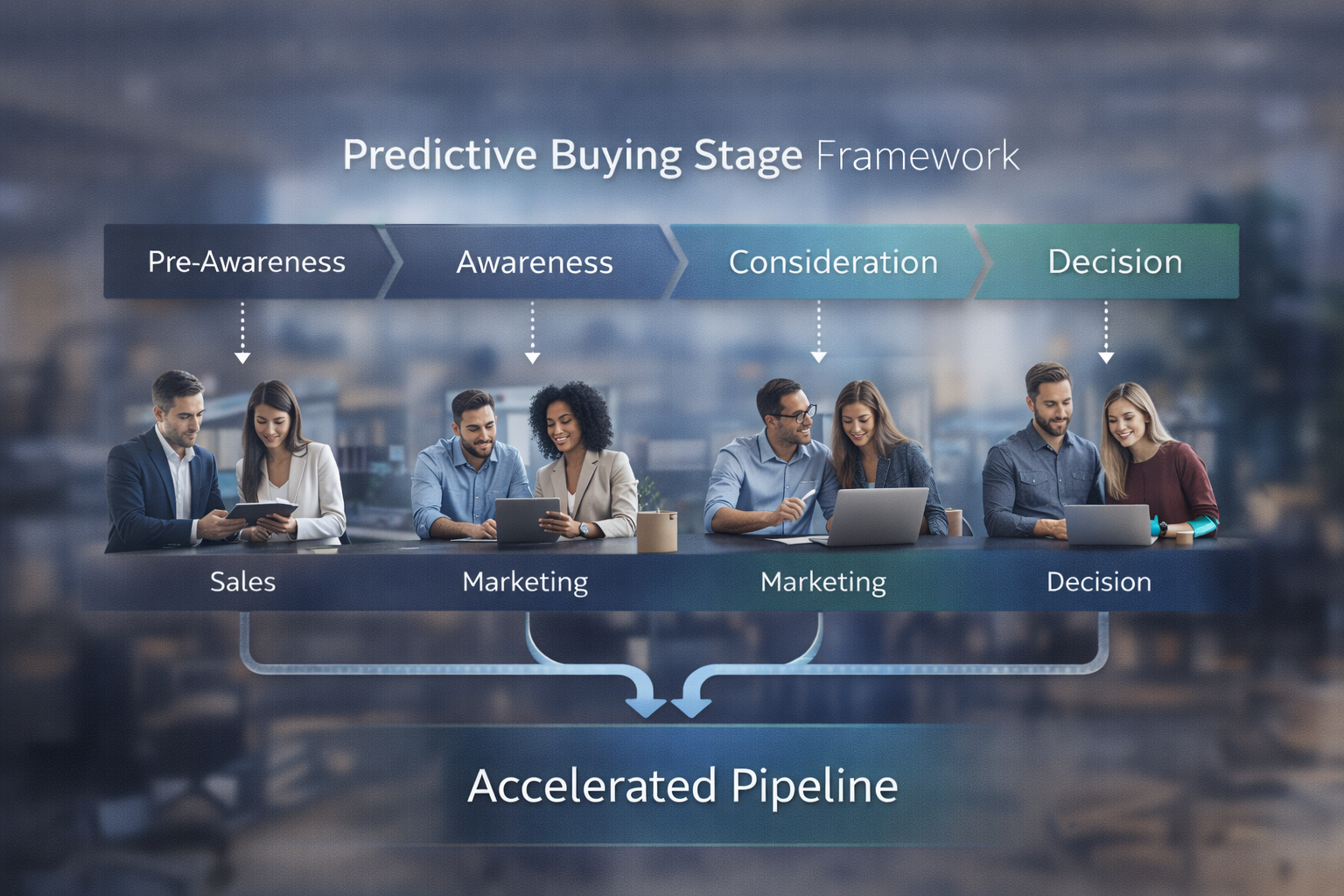
Predictive Buying Stage Intelligence: Aligning Sales and Marketing for Smarter B2B Revenue Growth
-

Measuring B2B Marketing Performance in an AI-Driven, Zero-Click Landscape
-
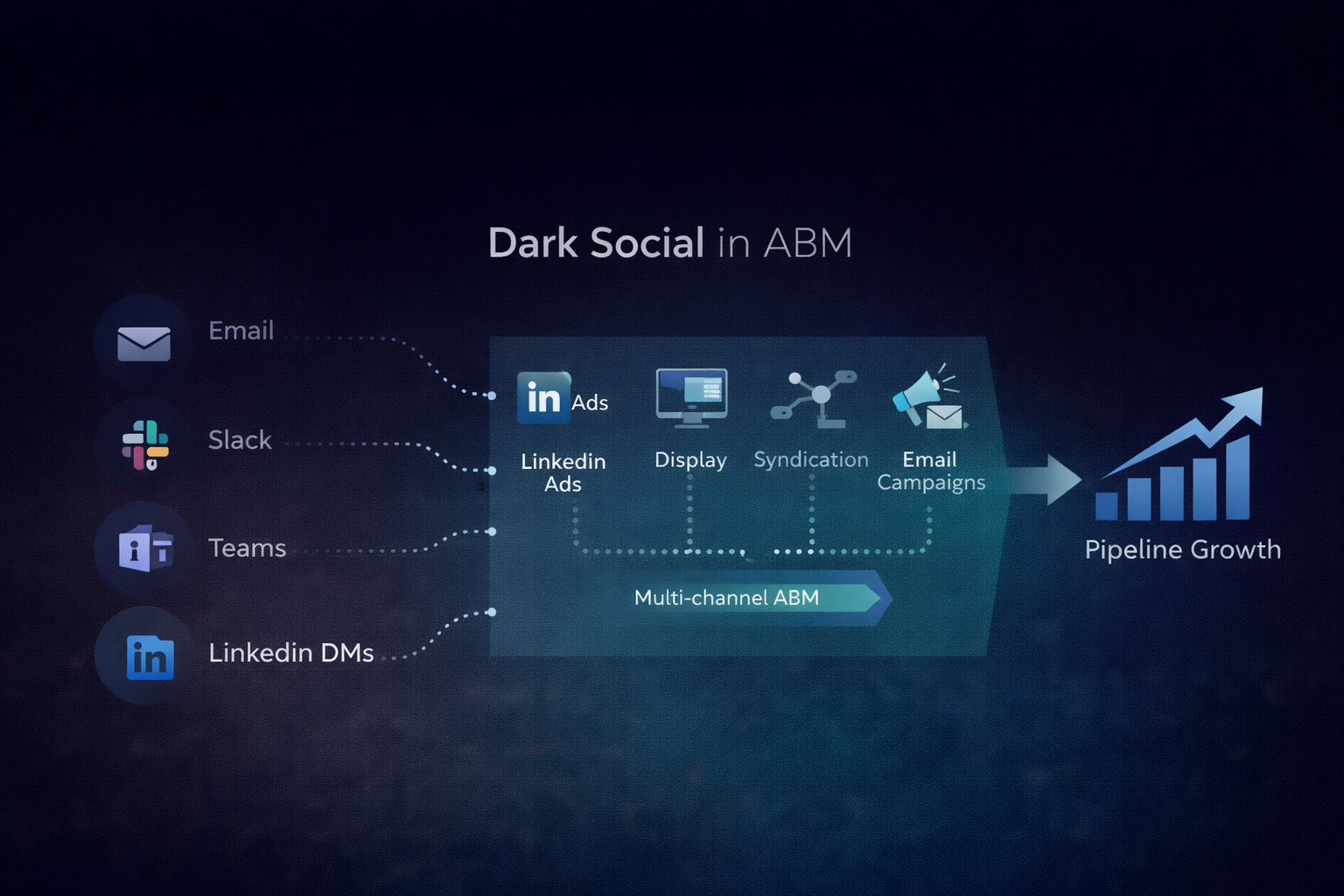
Dark Social in B2B Marketing: Turning Invisible Engagement into ABM Pipeline Growth
-
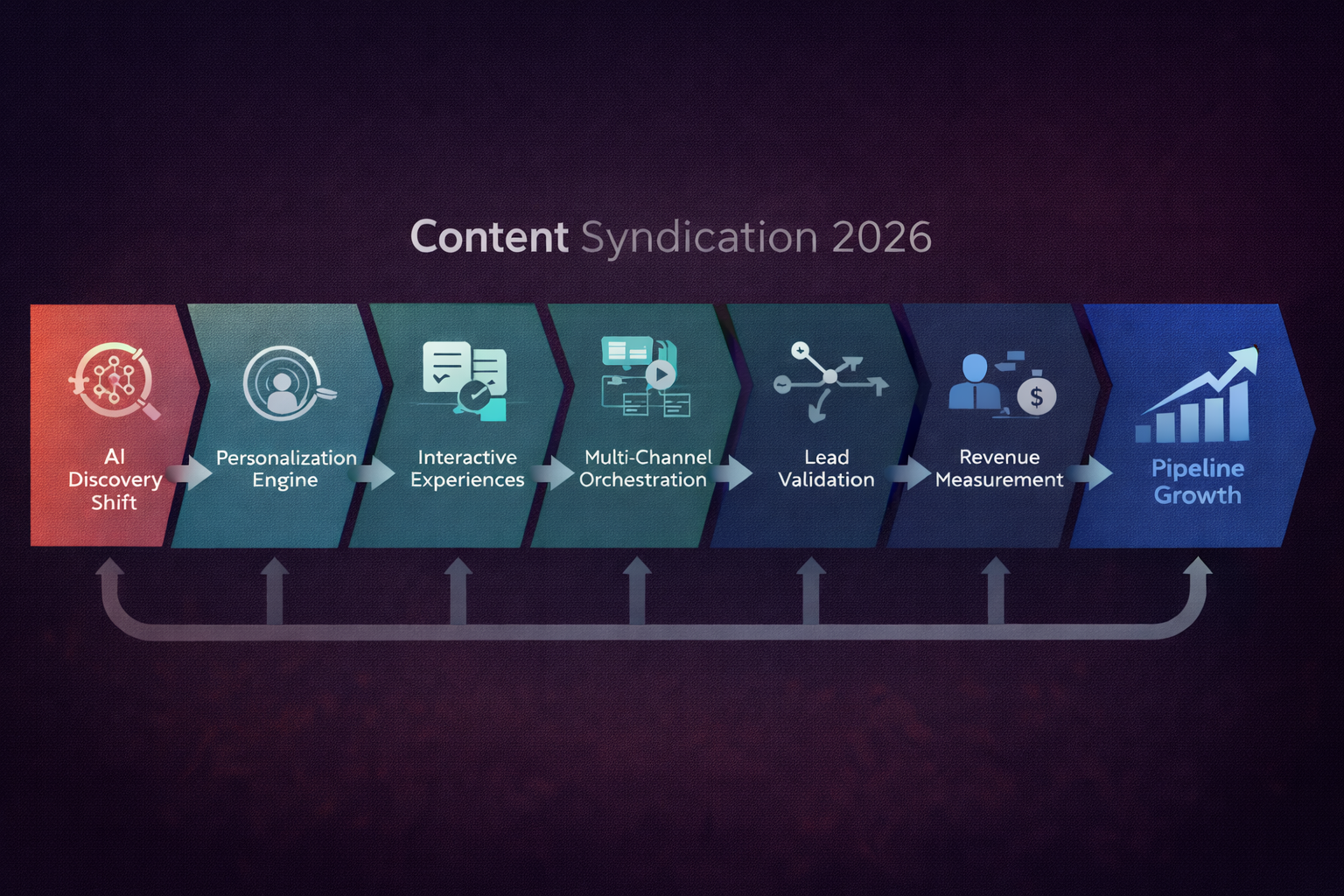
Content Syndication for ABM in 2026: 6 Strategic Shifts Driving Revenue, Not Just Leads
Get the Right Solution You Need from Our Expert Team Today
Quick, reliable support tailored to you.